


Choosing Replacement Tires
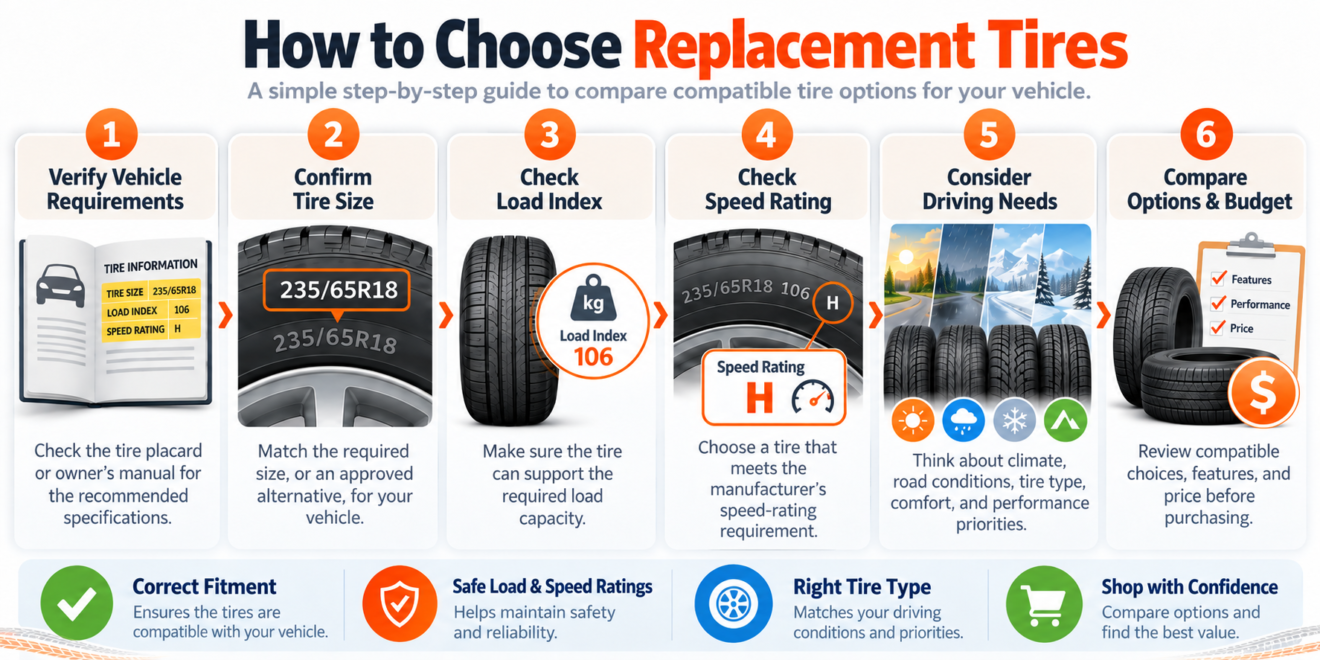
Choosing replacement tires involves more than selecting a brand or price. The tires should first meet the size, load, speed, and fitment requirements specified for your vehicle. Once compatibility is confirmed, you can compare options based on driving conditions, tire type, performance priorities, and budget.
Start With Your Vehicle’s Tire Requirements
Before comparing replacement tires, check the specifications recommended for your vehicle. These can usually be found on the Tire and Loading Information placard, commonly located on the driver’s-side door jamb, or in the vehicle owner’s manual.
These specifications provide the starting point for identifying tires that are suitable for your vehicle. If you are unsure how to begin, see our How to Find the Right Tires for Your Vehicle? guide.
Check the Correct Tire Size
Tire size is one of the first specifications to verify when choosing replacement tires. A tire size such as 235/65R18 provides information about the tire’s width, sidewall profile, construction, and wheel diameter.
Replacement tires should match the size recommended for your vehicle, or an approved alternative that is suitable for your specific vehicle configuration.
If you need help understanding tire-size markings, see our How to Read Tire Size? guide.
Verify Load Index and Speed Rating
After confirming tire size, check the tire’s load index and speed rating. These ratings help determine whether the tire meets the vehicle manufacturer’s requirements for load-carrying capacity and rated speed capability.
For more detail, see our What Is Tire Load Index? guide and Tire Speed Ratings Explained guide.
Consider Driving Conditions and Tire Type
Think about the conditions in which you normally drive, including climate, temperature, rain, snow, highway use, city driving, and road conditions. These factors can help determine whether an all-season, winter, summer, or other application-specific tire type is most appropriate for your needs.
Consider Performance and Driving Priorities
Once compatibility is confirmed, compare tires based on factors such as ride comfort, road noise, handling, tread life, and other performance characteristics that matter for your driving needs.
What About a Different Tire Size?
Some vehicles may support alternative tire sizes or different wheel and tire configurations. Any alternative size should be properly verified for vehicle compatibility before purchase.
See our OEM Tire Size vs Alternative Tire Sizes guide for more information.
Find Replacement Tires for Your Vehicle
Use Airless Tire Systems to search for replacement tires based on your vehicle’s year, make, model, and trim, or search by tire size if you already know the specifications you need.