


OEM Tire Size vs Alternative Tire Sizes
OEM tire size refers to the tire size originally specified for a vehicle by the manufacturer. Some vehicles may also support alternative tire sizes depending on the trim, wheel package, or approved configuration. Understanding the difference between OEM and alternative tire sizes can help you make a more informed replacement-tire decision.
What Does OEM Tire Size Mean?
OEM stands for Original Equipment Manufacturer. An OEM tire size is the tire size specified by the vehicle manufacturer for a particular vehicle configuration.
The recommended tire size is selected to work with the vehicle’s wheel dimensions, load requirements, suspension, braking, and other systems. When replacing tires, the OEM specification is a useful starting point.
Where Can You Find Your OEM Tire Size?
You can usually find the manufacturer’s recommended tire size on the Tire and Loading Information placard, commonly located on the driver’s-side door jamb, or in the vehicle owner’s manual.
The tire sidewall also shows the size of the tire currently installed on the vehicle. However, on a used or modified vehicle, the installed tires may not always match the original manufacturer specification.
If you need help understanding the size markings, see our How to Read Tire Size? guide.
Why Can a Vehicle Have More Than One Tire Size?
Some vehicles are offered with different wheel and tire combinations depending on the trim level, factory package, or model configuration.
For example, one trim may use a smaller wheel with a taller tire sidewall, while another may use a larger wheel with a lower-profile tire. Some vehicles may also use different tire sizes on the front and rear axles.
Because of these differences, it is important to verify the tire size that applies to your specific vehicle configuration rather than assuming that every version of the same model uses the same tires.
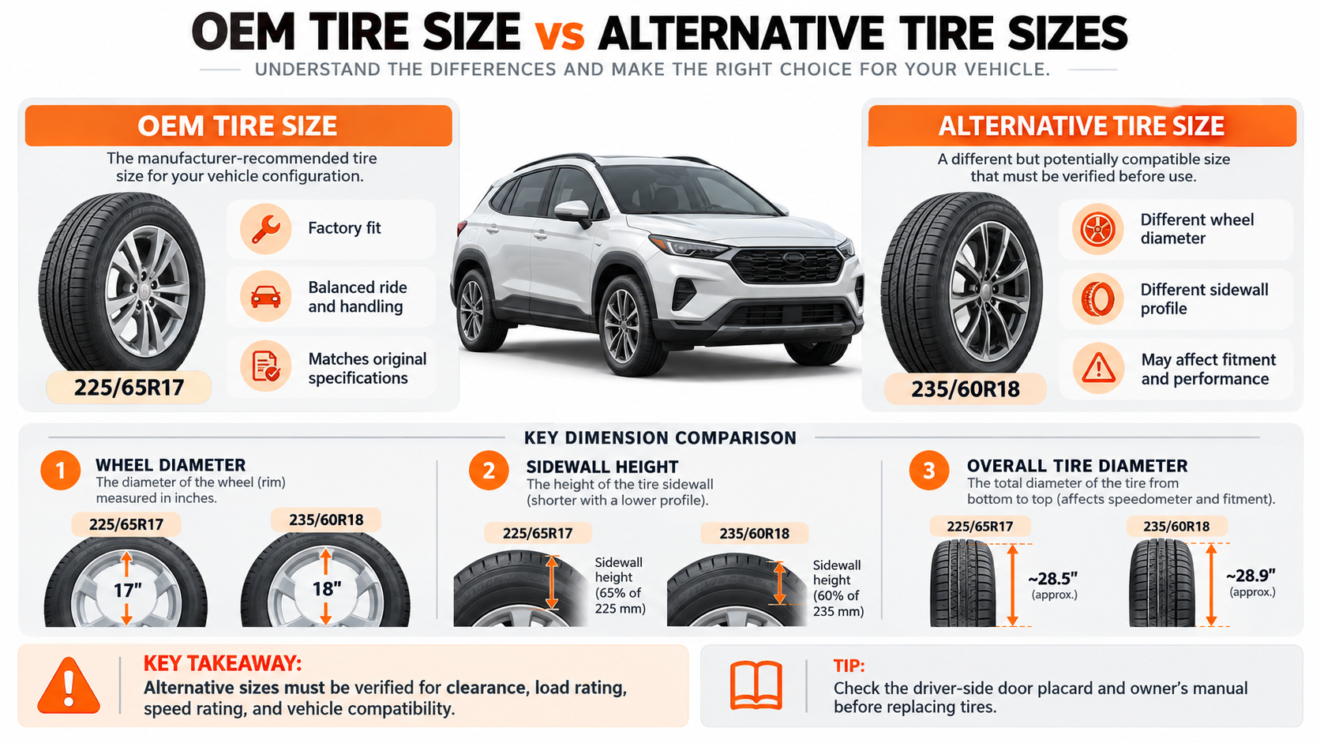
What Is an Alternative Tire Size?
An alternative tire size is a different tire size that may be suitable for a vehicle when the fitment and required specifications are properly verified.
Alternative sizing can involve changes to tire width, aspect ratio, or wheel diameter. A different size should not be selected only because it physically fits the wheel or looks similar to the original tire.
Compatibility should be checked against the vehicle manufacturer’s requirements before purchasing or installing an alternative tire size.
What Changes When Tire Size Changes?
Changing tire size can affect several dimensions and characteristics of the tire and wheel combination.
- Tire width
- Sidewall height
- Wheel diameter
Overall tire diameter
If you need help understanding tire-size markings, see our How to Read Tire Size? guide.
Why Alternative Tire Fitment Must Be Verified
Alternative tire sizes must be checked carefully because tire fitment involves more than overall diameter.
Before selecting an alternative size, verify:
- Vehicle and wheel compatibility
- Clearance
- Load index
- Speed rating
- Overall diameter
Find Tires for Your Vehicle
Use Airless Tire Systems to search for tires based on your vehicle’s year, make, model, and trim. Vehicle-based searching can help narrow the available options to tires that match the fitment information for your vehicle.
If you already know the tire size you need, you can also search by tire size.